
Investigation fails to find cause of massive Boyle Heights fire
A months-long investigation into a fire at a cold-storage warehouse that saturated Boyle Heights in smoke and rotten air for weeks was started by an “electrical event” of unknown origin, the Los Angeles Fire Department concluded.
LAFD has said the blaze originated on the roof, and officials with Lineage, the company that operated the warehouse, has alleged it was started by solar panels operated by a third-party company that was performing testing June 17.
But according to the department’s investigative report obtained by The Times on Tuesday, arson investigators could only say the fire started on the roof, “at or adjacent to a section of solar panels,” where an electrical event occurred.
The department ultimately could not rule out the solar panels on the roof, the equipment connected to them or the work being done at the time as potential causes for the fire. The fire started somewhere in the “Grid 2” section of the 12,400-panel array, the report said, but the cause of the underlying electrical event is a mystery.
For Los Angeles City Councilmember Ysabel Jurado, who represents Boyle Heights, the investigation’s conclusion was unsatisfactory.
“Determining what caused the Lineage fire matters — not only for accountability, but to help ensure a disaster like this does not happen again,” she said in a statement. “But LAFD’s finding that the cause remains undetermined does nothing to alleviate what Boyle Heights residents have endured and are still carrying: months of health concerns and disruption, along with unanswered questions about whether this site can safely operate again.”
Mayor Karen Bass said in a statement Tuesday she would continue to push to keep Lineage from rebuilding at the site.
“We must do all that we can do to prevent emergencies like this in the future,” she said.
Earlier this month, Lineage sued Altus Power, alleging the company and its contractor were negligent in operating the solar panels.
In a statement, a spokesperson for Lineage said the the LAFD’s report backed the company’s assertions.
“The report lists only one ignition source the LAFD could not rule out as a cause: ‘Solar panels and their connected components,’” the company said in a statement. “As we’ve known all along, this is a solar fire.”
Altus Power did not immediately respond to a request for comment.
The LAFD report described interviews with Lineage employees and managers who were on site when the fire began. One worker told fire investigators Altus had been working on the panels, but Lineage was unaware if the solar panels were already feeding power to the grid.
According to the report, a technician working on the roof at the time of the fire did not respond to LAFD investigators’ questions. Instead, an executive at the technician’s company, Pearce Services, called investigators and said the worker saw one solar panel melted and another on fire in the early moments of the blaze before Lineage knew what was happening.
“He used a fire extinguisher in an attempt to extinguish the fire and observed additional fires spotting in close proximity,” the report states.
Questions around the cause of the fire have centered around a solar array on the warehouse roof, where another fire started in 2024.
After the 2024 fire, Lineage representatives asked Los Angeles City Hall about removing an emergency shutdown switch from the solar panels, according to the Los Angeles Department of Building and Safety. A company spokesperson said Lineage was inquiring about potentially “safer” alternatives to the equipment’s rapid shutdown devices, which are designed to protect firefighters from shock but also have been linked to increased fire risk.
Ultimately, Lineage did not receive any variances or exemptions as a result of its efforts, a spokesperson said.
An LAFD incident report lists the cause of the 2024 fire as “failure of equipment or heat source.”
In its lawsuit filed Sept. 10 against Altus Power and subcontractor Pearce Services, Lineage claims Altus sought to re-energize the solar array to complete testing and commissioning around June 23, 2025. Two days later, Lineage demanded the array be shut down over concerns that certain components, including the rapid shutdown devices, could pose a safety hazard, and made clear the company would not allow Altus to re-energize the array until the concerns had been addressed, the complaint states.
Altus eventually agreed to undertake a reconfiguration project that involved removing and replacing the rapid shutdown devices, and inspecting and replacing mismatched connectors and all wire management, according to the lawsuit. Altus retained Pearce to perform the work.
The lawsuit alleges the project was plagued with sloppy workmanship and insufficient oversight. Lineague lawyers say Altus approved replacement rapid shutdown devices that had connectors that were incompatible with the connectors for the solar panels, and Pearce used jumpers between the connectors.
“The use of thousands of jumpers across the roof greatly increases fire risk because it creates many more connections, and each connection can create fire risk if not installed properly,” the lawsuit states. It further alleges that Pearce used as many as three different brands of connectors in a single location, “greatly increasing the risk of incompatibility or ignitions if there is an issue with any one type of connector.”
Pearce did not immediately respond to requests for comment Tuesday.
The lawsuit alleges that, in the days leading up to the most recent fire, Altus and Pearce ignored a request from Lineage that they not re-energize the solar panels until certain safety checks could be performed and the company could review the results.
Instead, according to the complaint, Altus and Pearce prematurely re-energized the solar array starting on June 5 and continuing from June 10 through 17, despite knowing that more than 200 “connector failures” had been identified the month before.
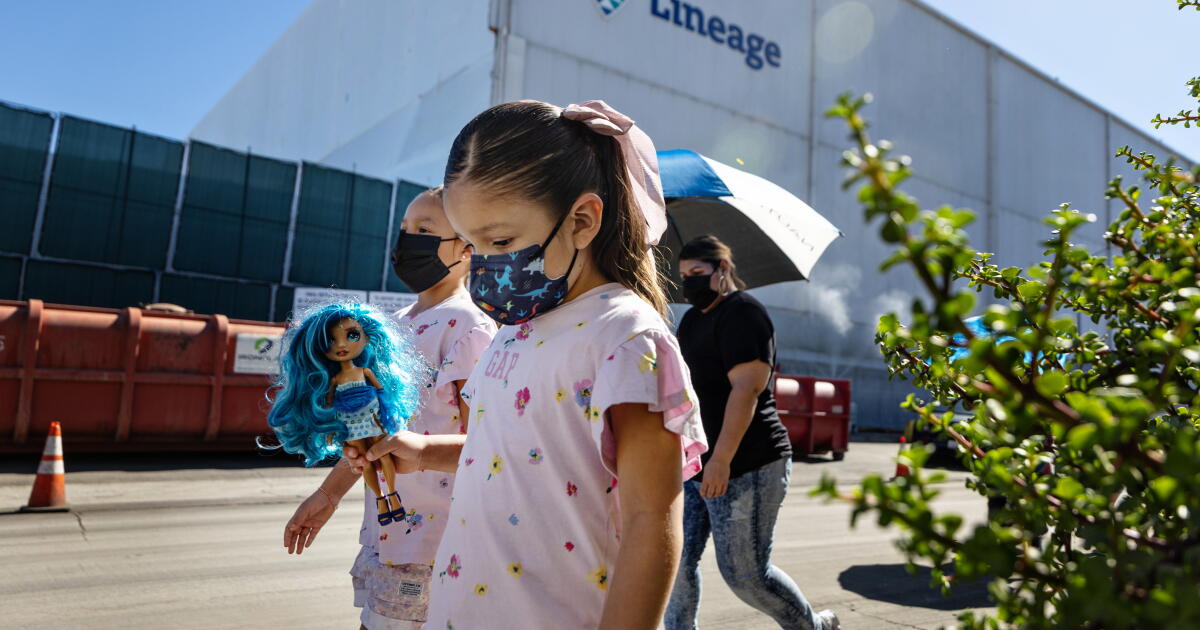
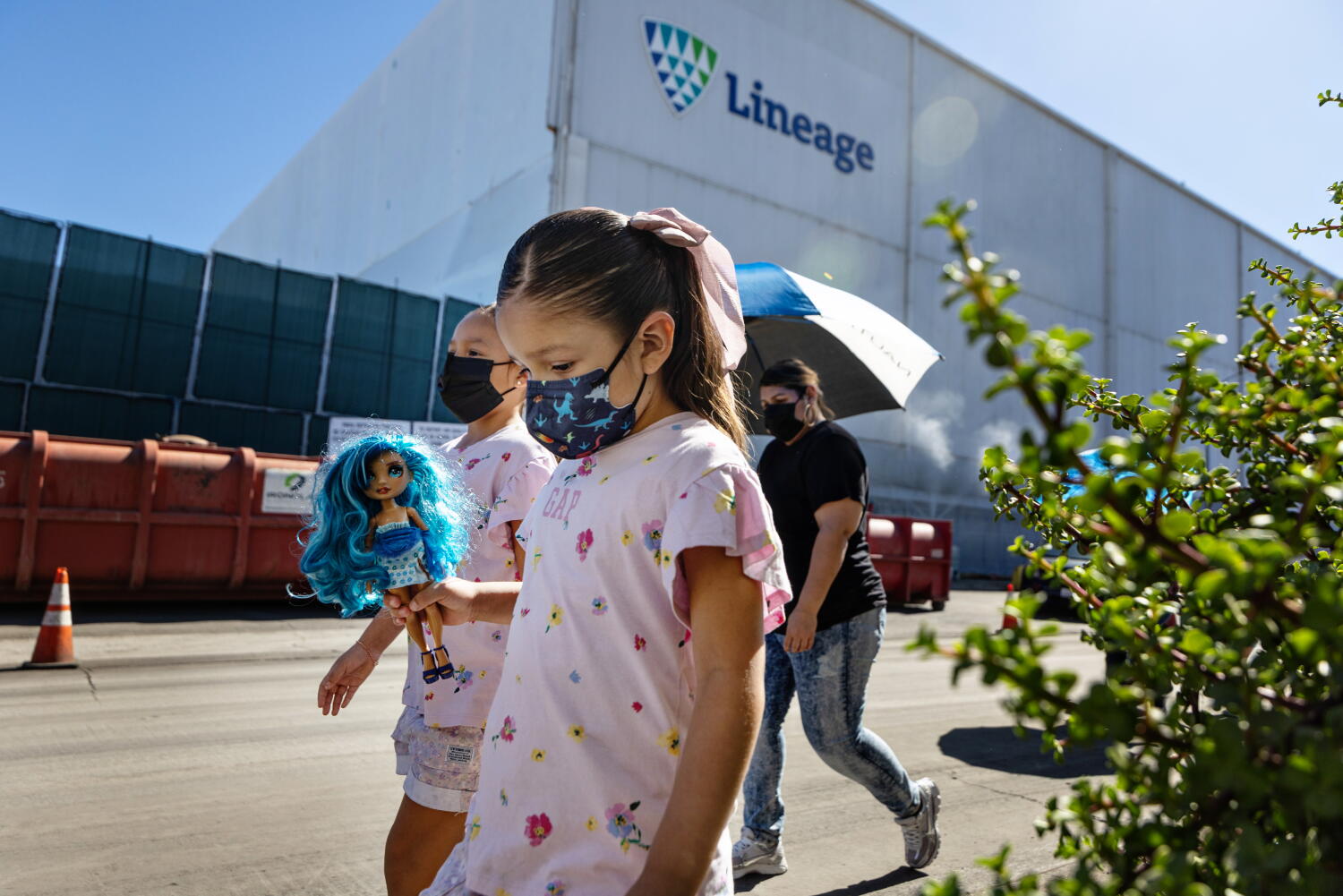
For more than a week after the fire began, residents in Boyle Heights and East L.A. endured acrid smoke as firefighters struggled to put out the flames.
After the fire entered the building, crews were forced to fight the flames from outside, tearing down walls so they could blast water cannons into the interior.
The fire’s aftermath was just as bad, with cleanup crews having to contend with removing 89 million pounds of thawing, rotting meat, debris and other material. As the days went on, the smell worsened, drawing swarms of flies and rats to the neighborhood, where they pestered and sickened locals.