Erosion reveals decades-old infrastructure ‘relics’ in Newport Beach
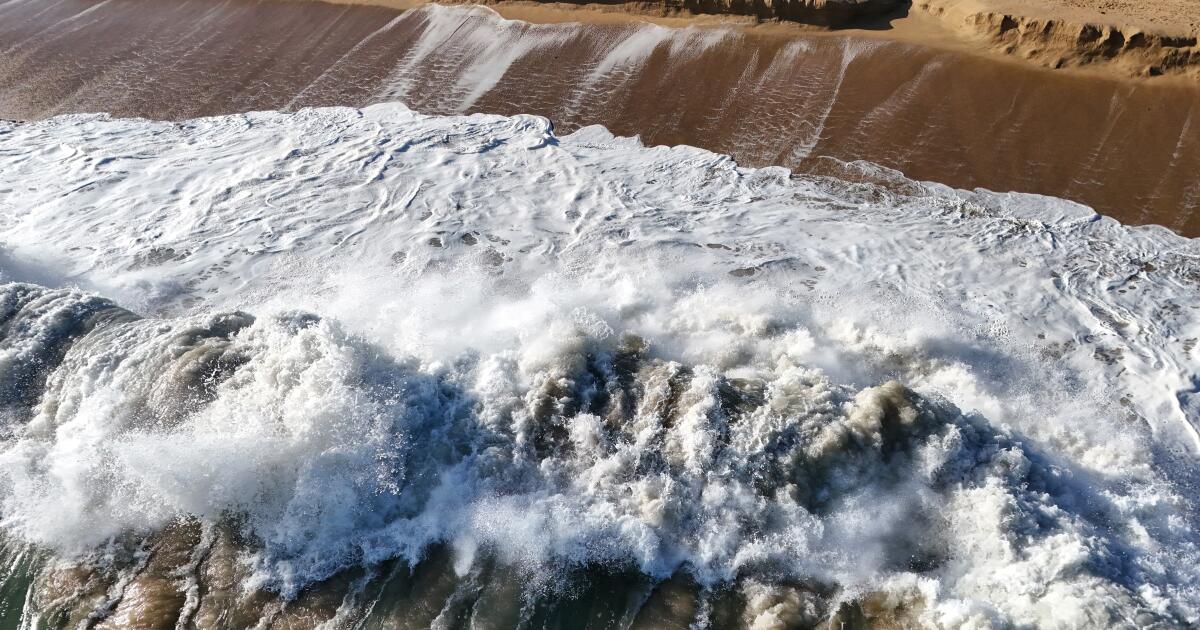
A series of powerful hurricane-driven swells have surfaced forgotten remnants of Newport Beach’s infrastructure that lay buried beneath sand and water for many decades.
Videos and photos circulating on social media show piles of rocks, chunks of concrete and rusted metal rods after waves removed layers of sand along the shoreline.
Much of the erosion has occurred near the west jetty where the popular surfing spot the Wedge is located.
“We’re aware of the sand erosion and the different relics getting exposed down there,” said Newport Beach Lifeguard Battalion Chief Adam Yacenda.
Decades ago, he said, the U.S. Army Corps of Engineers built a pair of jetties to stop beach erosion and protect oceanfront homes near the entrance of Newport Harbor.
“A lot of sand has been carved away, uncovering things that haven’t seen the light of day in decades,” Yacenda said. “There are PVC pipes, wires and a railway tie underneath the water and occasionally some metal.”
The storm swells come amid a growing El Niño, a climate pattern characterized by warming ocean waters in the central and eastern tropical Pacific, as well as increased rainfall. The 2015-16 El Niño pattern was blamed for record beach erosion along California’s coast.
At least three hurricanes have developed in the central and eastern Pacific since July, including Hurricanes Fausto and Genevieve, which generated life-threatening waves, strong rip currents and high surf warnings for Southern California.

A youngster on the beach is sprayed with sandy water June 9, 2026, amid high surf at the Wedge.
(Don Leach / Daily Pilot)
Earlier this month, Los Angeles County’s Department of Beaches and Harbors announced the temporary closure of Point Dume State Beach after high tides and surf caused extreme erosion, damaging bathrooms and leaving the bluff edge unstable, with drop-offs of up to 8 feet in some areas.
In Carlsbad, strong surf and high tides stripped away much of the sand and damaged a parking lot at Tamarack State Beach, which had received about 400,000 cubic yards of sand dredged from a nearby lagoon in early 2025, according to SFGate, which was first to report the issues in Newport Beach.
State park officials did not immediately respond to a request for comment.
The erosion in Newport Beach comes after a busy summer for lifeguards, who in June had to take roughly 12,000 preventive actions, including moving people out of hazardous situations and carrying out more than 500 rescues.
The erosion of the beach now has sparked curiosity about what may be buried under the sand and safety concerns for local surfers at the Wedge.
Some residents believe the exposed material is part of an old groin that was built long before it expanded into a jetty.
Jetties are long barriers often constructed of boulders or concrete at inlets or harbors to keep navigation channels open, while groins are shorter and often are built on open beaches to stop erosion and widen the sand area.
A spokesperson for the city of Newport Beach did not immediately respond to questions about the material exposed on the beach.


