
Best Volatility ETFs: VIX ETF List for 2026

In this article, I will provide the history and top VIX ETFs. Lastly, I will discuss the top 3 VIX ETFs for active traders. An active trader is someone that day trades or swing trades throughout the year.
VIX is calculated based on the implied volatility of a group of options on the S&P500, which includes options that are nearing their expiration and options that are expiring the next month.
The indicator is also referred to within the trading community as the fear index. This is because heavy selloffs produce a spike in the VIX.
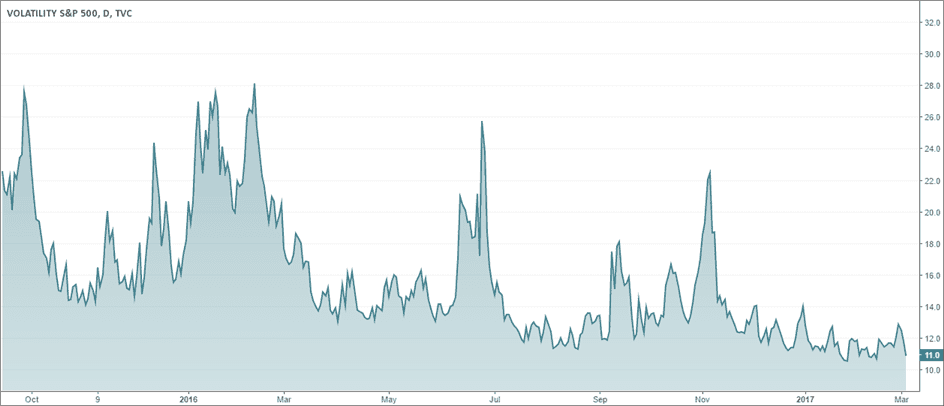
An important point as you look at the above graph of the VIX is that there is no direct correlation with the price action of the S&P500. For example, the market could make a minor move, but options traders could be prepping for a selloff and there is a spike in put options which sends the VIX climbing.
General Rules of Thumb
While the price action does not mirror the index, here are a few rules of thumb.
- If the VIX plummets, the market is bullish.
- Spikes to the upside imply the market is in bearish territory.
I remember looking at the indicator in the early 2000s. A spike above 60 pretty much-called market bottoms and readings in the 20s would predict market corrections.
But since we have been on this nearly 10-year bull run, low readings in the VIX don’t mean as much.
What’s the Difference Between VIX Products and Other Securities
The one main difference is you can buy a stock and it can increase many multiples. For example, whoever had the presence of mind to buy and hold Apple is a genius.
Now, the VIX will have nice price swings, but these are within a range. What I mean by this is the VIX is not going to go from 30 to 200 and then trade within that 200 range for an extended period of time. At some point, the indicator is going to come back down to earth.
Again, this is a measure of forward option activity and options do not stay at sustained levels to the low or high side for very long.
Let’s look at a few charts to further illustrate this point.
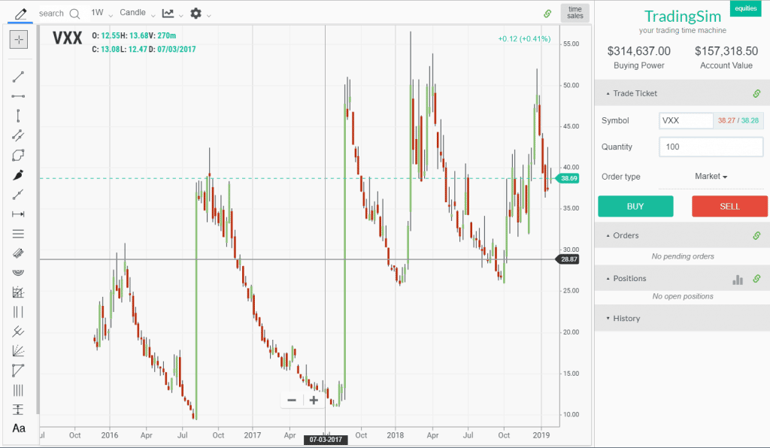
VXX Chart – iPath S&P 500 VIX ST Futures ETN (VXX)
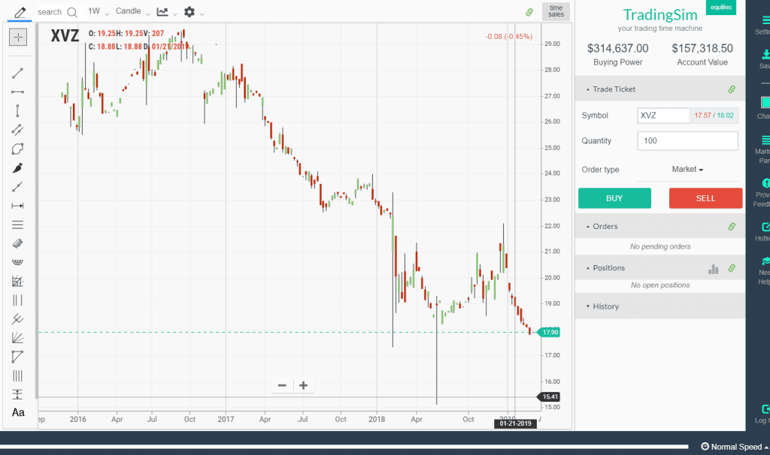
XVZ = iPath S&P 500 Dynamic VIX ETN
As you can see from both of these charts while there is movement, you are not going to get the up and to the right action like ETFs that mirror a market index or a growth stock.
Why Do Traders and Investors Trade VIX Products?
The funny thing about volatility is that it is not a commodity or a stock. Yet, despite this rather distinguishable factor, volatility is often a sought after security among day traders and investors.
Day Traders
For day traders, volatility gives them the opportunity to trade securities like the TVIX which have a lot of liquidity. This allows traders to get in and out of the market quickly throughout the day.
Investors
While this article covers active investors, volatility is used as a hedging tool to protect their long term investments.
What is the Best Volatility ETF?
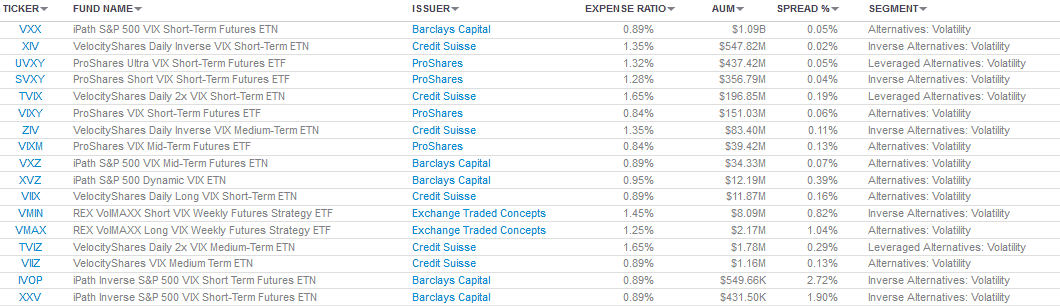
Types of Volatility ETFs (Source – ETF.com)
You can go long or short. You also have the option of looking at short-term, mid-term and inverse futures.
This is a pretty exhaustive list. Like everything else in the market, it’s always a good idea to focus in on one or two instead of trying to boil the ocean trading every security.
Categories of Volatility ETFs
Let’s group these ETFs into subcategories to make things clearer. Please note some of these tickers could be inactive as the ETF has fully matured. If so, you will need to do a bit of research to locate the latest ticker.
Standard Volatility ETFs
Below is a list of standard volatility ETFs which track short-term and mid-term futures.
| Symbol | ETF Name | Total Assets* | YTD | Average Volume | Previous Closing Price |
| VXX | iPath® S&P 500 VIX Short-Term Futures ETN | 1055234.5 | -31.24% | 38959332 | 17.54 |
| VIXY | ProShares VIX Short-Term Futures ETF | 150716.7 | -31.28% | 2671011 | 14.61 |
| XIVH | VelocityShares VIX Short Volatility Hedged ETN | 46140 | 30.07% | 2161 | 45.89 |
| VIXM | ProShares VIX Mid-Term Futures ETF | 39645.9 | -17.12% | 26271 | 35.09 |
| VXZ | iPath S&P 500 VIX Mid-Term Futures ETN | 34022.2 | -16.90% | 133619 | 28.96 |
Besides the classic volatility-based ETFs there are those which are leveraged and inverse.
Leveraged Volatility ETFs
The leveraged volatility ETFs offer a magnified exposure to the VIX. These instruments can provide amplified returns but they come with larger expense ratios which can exceed 1%.
| Symbol | ETF Name | Total Assets* | YTD | Average Volume | Previous Closing Price |
| UVXY | ProShares Ultra VIX Short-Term Futures ETF | 435972.4 | -53.99% | 13457313 | 20.13 |
| TVIX | VelocityShares Daily 2X VIX Short-Term ETN | 195975.3 | -53.78% | 13855800 | 4.4 |
| TVIZ | VelocityShares Daily 2X VIX Medium-Term ETN | 1795.4 | -31.69% | 11894 | 5.13 |
Inverse ETFs
Inverse volatility ETFs move in the opposite direction of the VIX. Please make sure you read later in the summary section of this article how that at times can be risky.
| Symbol | ETF Name | Total Assets* | YTD | Average Volume | Previous Closing Price |
| XIV | VelocityShares Daily Inverse VIX Short-Term ETN | 548608.8 | 42.07% | 13875242 | 66.42 |
| SVXY | ProShares Short VIX Short-Term Futures ETF | 357304.5 | 41.56% | 3137016 | 128.79 |
| ZIV | VelocityShares Daily Inverse VIX Medium-Term ETN | 82897.3 | 19.53% | 37127 | 55.63 |
The Top 3 Volatility ETFs for Traders
This is a pretty big statement, so let me qualify this before we go any further.
I am going to list out the five volatility ETFs that are the most active on a daily basis. Essentially these are the ones which come up on my scan on a daily basis. These are great for getting in and out of trades with ease.
- ProShares VIX Short-Term Futures ETF (VIXY) is no doubt one of the top VIX ETFs to trade. The ETF has an average daily volume of 1.9 Million and over 200 Million in total assets.
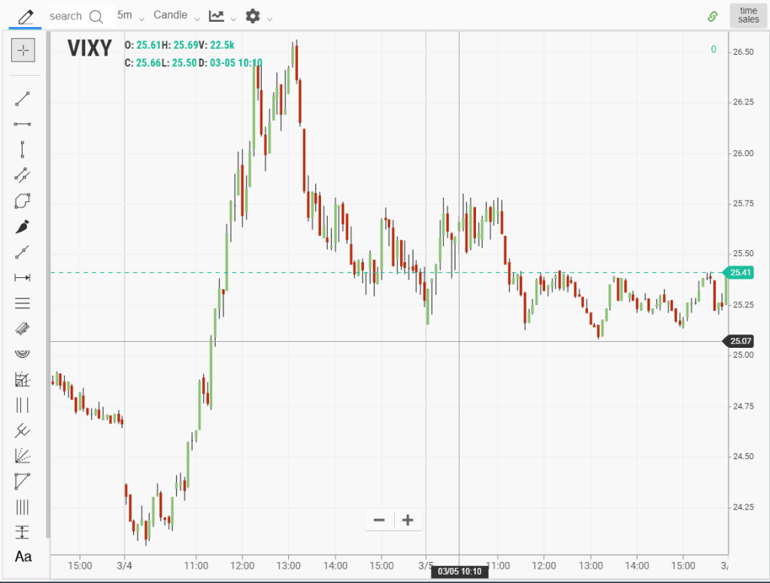
VIXY
- VelocityShares Daily 2x VIX Short-Term ETN (TVIX) (Editor’s note, July 2026: TVIX was delisted by Credit Suisse in July 2020 and no longer trades — see the update section below for current alternatives.) is a leveraged ETF. This means for every point move in the VIX, the ETF moves double in value. I personally stay away from leveraged ETFs because of the increased volatility. ETF has an expense ratio of 0.85%. The VIXY does not represent a spot investment in the VIX, but rather is linked to an index comprised of VIX futures.
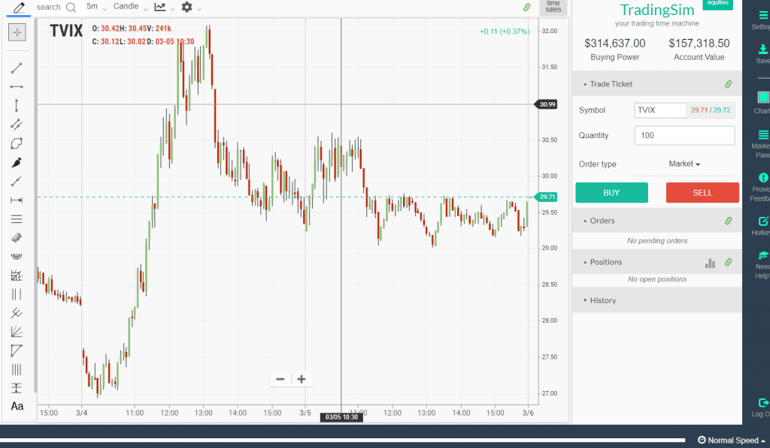
TVIX
- The ProShares Ultra VIX Short-Term Futures ETF (UVXY) this is essentially the same as the TIVX, it’s just offered by a different company. Both the UVXY and TVIX have the same expense ratio of 1.65% but the UVXY has an average daily volume of 17M, which is almost double that of the TVIX.
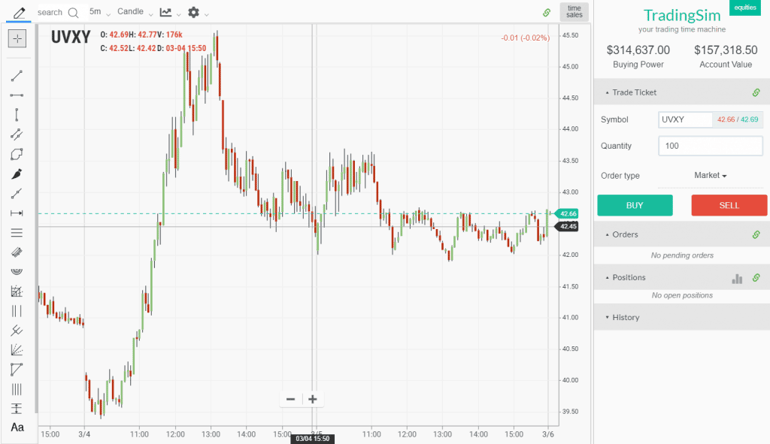
UVXY
In Summary
VIX related ETFs are not meant to be a long-term investment. These instruments are for traders and not for a 401k plan.
If you disagree with me, please check out this article which covers the fallout of the XIV ETF by Credit Suisse Bank. This was an inverse ETF to the VIX and when the market sold off, the VIX spiked. This led to the XIV dropping a whopping 90% in a matter of days.
Again, great for short-term traders, but not something for value investors to park their money.
How Can We Help
If you are contemplating trading these securities, you can test out your strategies within Tradingsim. We have all of the VIX ETFs for you to see which one is best aligned to your trading style.
Volatility ETF Lineup Changes: July 2026 Update
The volatility product landscape has turned over substantially since this article was written, and several instruments named above no longer exist. TVIX was delisted by Credit Suisse in July 2020, and XIV was terminated back in February 2018 after the “Volmageddon” spike. The original VXX ETN matured in January 2019 and was replaced by a Series B note under the same ticker. UVXY also changed character: ProShares cut its leverage from 2x to 1.5x in April 2021, and SVXY has run at -0.5x since 2018.
The most active replacements for the delisted leveraged products came from Volatility Shares, which launched UVIX (2x long VIX futures) and SVIX (-1x short VIX futures) in March 2022. Today the practical shortlist for most traders is VIXY or VXX for straightforward long volatility exposure, UVIX for leveraged long exposure, and SVIX for inverse exposure — with the same warning that applied in the original article: these are short-term trading vehicles that decay over time and are not buy-and-hold investments. Always verify a fund’s current leverage, expense ratio, and listing status with the issuer before trading it.
Frequently Asked Questions
What is the best volatility ETF to trade?
For plain long volatility exposure, VIXY and VXX remain the most liquid choices. For leveraged exposure, UVIX offers 2x long VIX futures, and SVIX offers -1x inverse exposure. The right product depends on your time horizon, which should be short in every case.
Is TVIX still trading?
No. TVIX was delisted by Credit Suisse in July 2020. Traders looking for leveraged long volatility exposure today generally use UVIX, launched by Volatility Shares in March 2022.
Why do volatility ETFs lose value over time?
Most VIX products hold VIX futures that must be rolled forward each month. When the futures curve is in contango, which is most of the time, that roll steadily erodes the fund’s value, making these products unsuitable for long-term holding.
Can you buy the VIX index directly?
No. The VIX is a calculated index, not a tradable security. Traders get exposure through VIX futures, options on those futures, or exchange-traded products like VIXY, VXX, UVIX and SVIX that hold the futures.
Are volatility ETFs good for beginners?
Generally not. Between contango decay, leverage resets, and the speed of volatility spikes, these are among the most punishing products for inexperienced traders. Practicing with simulated trades first is strongly advised.