You’re the best player in the NCAA Tournament. It doesn’t mean you’ll have an NBA future.

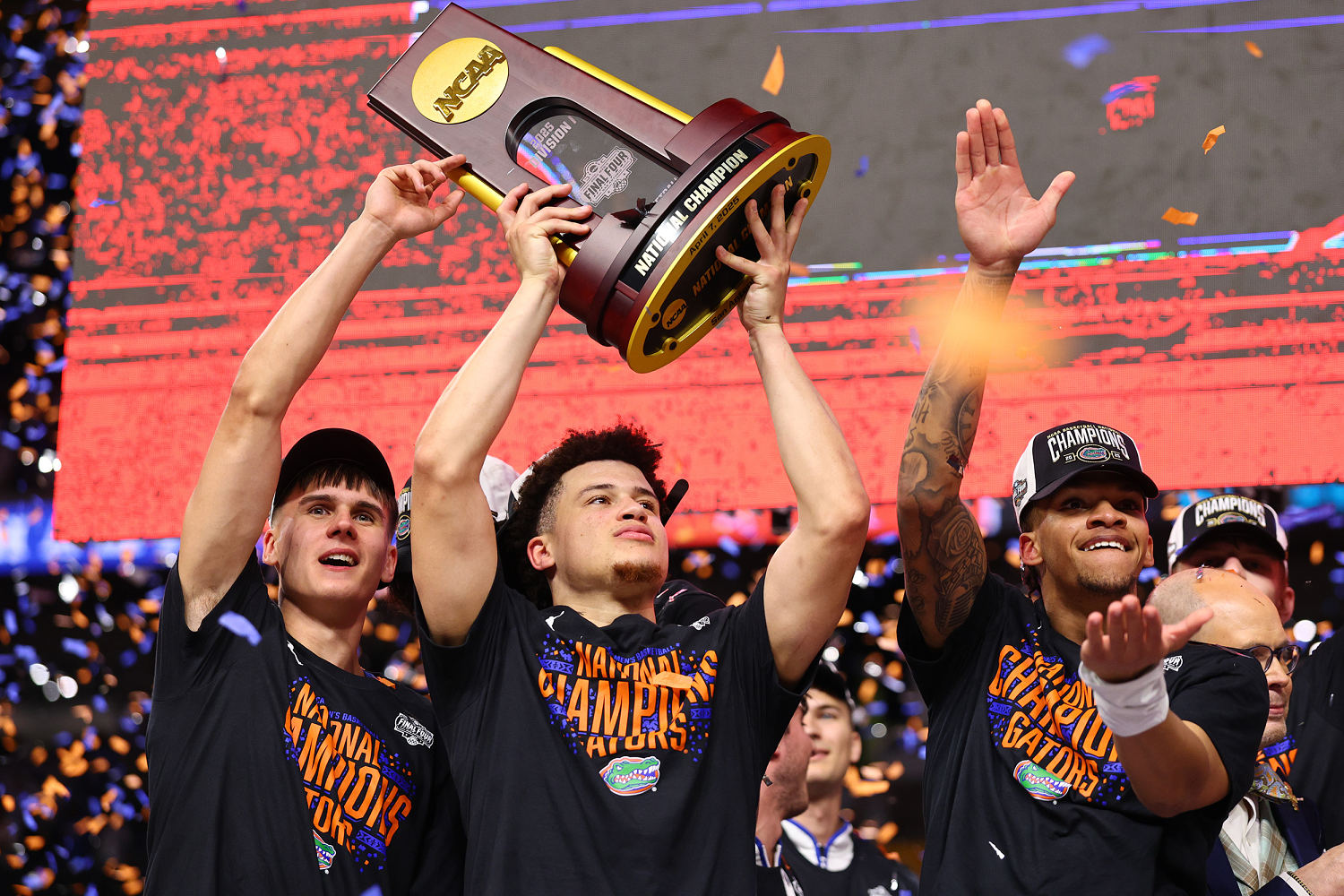
Newton, 24, learned that on draft night, when he was selected 49th overall in a 58-player draft. In two seasons, Newton, a 6-foot-5 guard, has appeared in eight NBA games while playing primarily in the NBA’s developmental minor league.
He added that “NBA and college careers, I guess those are two different — they don’t really correlate with each other anymore.”
Winning Most Outstanding Player is but one of hundreds of data points NBA teams use to evaluate prospects, from how they play on the court to how they carry themselves off it. Indeed, two executives of NBA teams, who spoke on the condition of anonymity in exchange for their candor about the draft process, said they didn’t even realize the past connection between winners of the award and often strong NBA careers. They viewed a strong performance in the tournament and particularly the Final Four as a helpful line in a player’s broader résumé but not a difference-maker. Conversely, struggling in the tournament wouldn’t be held against a prospect who had played well all season, an executive said.
When Ewing left Georgetown for the NBA in 1985 and was drafted first overall by the New York Knicks, he was the definition of a college superstar. He had led the Hoyas to three NCAA championship games in four seasons, winning once, and he remains so closely intertwined with his college success, in fact, that this month AT&T placed him in not one but two ads playing throughout the NCAA Tournament.
In 1985, however, the pathway to the NBA was far more limited than it is four decades later. With only a few exceptions, being eligible for the draft then required a player to be at least three years out of high school, and international players often had to be at least 21. Of the 24 players taken in that year’s first round, just three were international; last year, international players accounted for more than a third of the first round.
A record 135 foreign-born players were on NBA rosters at the start of this season, many of whom never played collegiately. That has meant more competition for a few roster spots.
“When I played, there was a few guys from Europe that was in the league or from Africa with Hakeem and Dikembe [Mutombo] and those guys. But now it’s a lot larger pot,” Ewing said.
And many foreign players, he said, are the “cream of the crop” — such as Nikola Jokic and Giannis Antetokounmpo, who have combined to win the Most Valuable Player award in five of the last seven NBA seasons. They never played a second in college.
It isn’t that players are leaving college worse than in previous eras, said a high-ranking NBA team executive who has helped oversee college scouting. Younger players now have access to better technology, equipment and health care. But the difficulty of sticking in the NBA for even decorated college players has increased as eligibility rules have changed and, as a result, so have the draft preferences of NBA teams. Since 2006, draft-eligible prospects must be 19 and a year removed from high school.
“The thought is always you get these younger guys in your [NBA or G-League] program and they don’t have to worry about school and you can really develop their bodies and games and make them better players,” an NBA team executive said. “The old-school mentality was ‘I just want ready-made players who can win games,’ and that’s changed in the NBA. We’re spending more time developing guys than winning right off the bat with them.”
In theory, a younger prospect arrives with fewer bad habits and can play longer.
“I think they definitely want younger guys,” said Walter Clayton Jr., who was 22 when he won the 2025 tournament’s Most Outstanding Player with Florida. Clayton was drafted 18th overall and now plays for the Memphis Grizzlies.


