
7 Best Futures Trading Books for Traders

Editor’s note — updated September 2026. The list prices and Amazon star ratings quoted under each title were captured when this list was first compiled and have not been re-verified. Book prices and review counts change constantly, so treat those two lines as a snapshot rather than current figures and check the live listing before buying. Everything else — authors, editions, and what each book is good for — has been checked and is current. One edition note has been added under Murphy at #4.
Overview
Futures offers many benefits such as lower trading capital, leverage and the ability to go long or short.
But how do you take advantage of these opportunities? Where should you start as a retail trader?
Many retail traders prefer to take a trading course or invest in a black box trading system.
However, these shortcuts don’t help in the long run, as it comes down to putting in the hard work of mastering your craft.
In this article, we will cover the seven best books for futures trading.
#1 – Futures 101, Richard E. Waldron (1997)
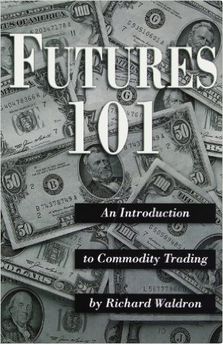
Futures 101 (2000 Edition)
What better way to get started with futures trading than a primer that does not get too technical.
The book neither encourages nor discourages you to trade futures.
The book is just right if you are a beginner to futures trading. In short Futures 101 is a professional booklet that could also be called “Futures for Dummies.”
Amazon ratings: 3.6/5 (27 Reviews)
Price: $49.77 (Paperback); $12.06 (Kindle)
#2 – Starting Out in Futures Trading, Mark Powers (2001)
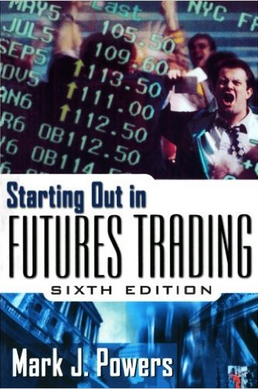
Starting Out in Futures Trading
Starting out in Futures trading is a book written for serious speculators.
The book is currently in its sixth edition and covers all aspects of futures trading. It highlights the importance of stock indices, how to choose a broker, and the nuances of placing different order types.
Powers served as the chief economist for the Commodity Futures Trading Commission, so he knows what he is talking about.
Amazon Ratings: 4.1/5 (11 Reviews)
Price: $11.97 – $25.09 (Paperback); $21.30 (Kindle)
#3 – Fundamentals of Futures Market, Donna Kline (2001)
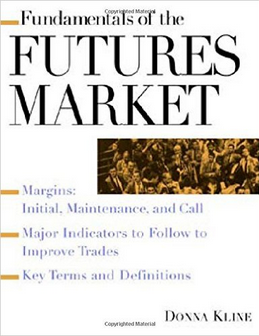
Fundamentals of the Futures Markets
Donna Kline is a financial news reporter with Bloomberg TV and served as a market analyst for “The Floor Report”. She was a frequent guest on CNBC’s Squawk Box.
Fundamentals of Futures market introduces you to the fundamental aspects of the futures markets.
The book combines quizzes, checklists, and charts to help educate you on the futures markets.
The book is best suited for agricultural commodities, but also does a great job of discussing specifics of the E-mini S&P
Amazon Ratings: 4.3/5 (13 Reviews)
Price: $8.00 – 39.69 (Paperback); $29.03 (Kindle)
#4 – Technical Analysis of the Futures Markets: A Comprehensive Guide to Trading Methods and Applications, John J. Murphy (1986)
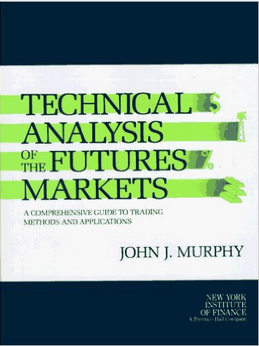
Technical Analysis of the Futures Markets
Don’t let the year of the publication fool you. If you have had any experience with technical analysis, you know John J. Murphy is perhaps the most well-known name.
The face of Stockcharts.com, Murphy is a thought leader in the technical analysis space.
Technical Analysis of the futures markets takes the reader into different techniques and patterns. The book lays a good foundation from which you can build upon.
[Edition note, September 2026: Murphy revised and expanded this book in 1999 as Technical Analysis of the Financial Markets: A Comprehensive Guide to Trading Methods and Applications, which broadens the coverage beyond futures to stocks and other markets. The later title is the one most readers will find in print today, and it is generally the better starting point unless you specifically want the futures-only original.]
Amazon Ratings: 4.3/5 (25 Reviews)
Price: $14.88 (Hardcover)
#5 – Long-Term Secrets to Short-Term Trading, Larry Williams (2011)
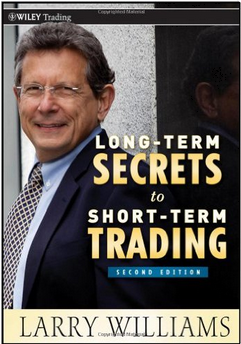
Long-Term Secrets to Short-Term Trading
Larry Williams is best known for the Williams %R technical indicator.
Long-term secrets to short-term trading covers various topics such as volatility breakouts and profitable patterns.
For day traders, the book is a must-read. There is an entire section on position sizing and risk management.
Amazon Ratings: 3.9/5 (14 Reviews)
Price: $53.13 (Hardcover); $54.20 (Kindle)
#6 – Trade Stocks and Commodities with the Insiders: Secrets of the COT Report, Larry Williams (2005)
Trade Stocks and Commodities with the Insiders
Larry gives a detailed outlook into explaining the various sections of the Commitment of Traders report, which is released weekly by the CFTC.
The book is best for commodities like agriculture and crude oil.
Amazon Ratings: 4.3/5 (34 Reviews)
Price: $65 (Hardcover); $29.03 (Kindle)
#7 – One Good Trade: Inside the Highly Competitive World of Proprietary Trading, Mike Bellafiore (2010)
One Good Trade
Mike Bellafiore is a well-known name among the prop trading circles. Owner/co-founder of SMB Capital, Bellafiore gives you tons of insights into how professional traders operate.
Mike Bellafiore’s One Good Trade has received rave reviews from some of the well-known authorities in the financial markets including Brett Steenbarger, a Ph.D. on trading psychology and a professional trading coach.
One Good Trade will take you on a journey and provides a view into the trading mindset, more so than just charts and strategies.
Amazon Ratings: 4.2/5 (123 Reviews)
Price: $42.98 (Hardcover); $41.61 (Kindle)
How Can Tradingsim Help?
After you have had the time to soak up the knowledge expressed in these books, test out these strategies within Tradinsgim. We currently have over 20 highly liquid contracts for you to practice with in order to master your craft.
How to Work Through This List
Seven books is a lot of reading, and they are not all aimed at the same person. Reading them in publication order is
the wrong approach. Here is a more useful way to pick.
| If you are… | Start with | Why |
|---|---|---|
| New to futures entirely | Futures 101 (Waldron), then Starting Out in Futures Trading (Powers) | Mechanics and vocabulary before methods. Powers adds broker selection and order types. |
| Coming from equities | Murphy, then Kline | You already know charts; what you need is contract structure, expiration and margin. |
| Focused on chart-based entries | Murphy, then Williams (Long-Term Secrets) | Foundation first, then volatility breakouts and position sizing. |
| Trading agricultural or energy contracts | Kline, then Williams (COT Report) | Both lean toward physical commodities and positioning data. |
| Working on discipline rather than setups | One Good Trade (Bellafiore) | It is a book about process and desk culture, not indicators. |
A gap worth naming: none of these seven covers the contract-specification detail you need on day one — tick sizes,
multipliers, trading hours and rollover dates. That is not a criticism of the books, it is simply information that
changes too often to print. Our guides to
micro futures contracts,
futures market trading hours
and contract rollover fill that in.
What Has Changed Since These Books Were Written
The oldest title on this list is from 1997 and the newest from 2011. The principles hold up — that is why they are
still worth reading — but the market they describe has moved on in four ways that matter.
- Micro contracts. CME launched Micro E-mini index futures in 2019, at one-tenth the size of the
E-minis these books discuss. The capital needed to trade an index future responsibly is now far lower than any of
these authors assumed. - Single stock futures returned. After OneChicago closed in September 2020, CME relisted
single stock futures in July 2026 —
a product category that did not exist in the U.S. for almost six years. - Nearly round-the-clock sessions. The pit-session assumptions in the older books have been replaced
by electronic trading that runs close to 23 hours a day. Knowing
when volume actually shows up
now matters more than knowing when the market is open. - Commissions and access. Broker economics and platform quality have changed enough that the
broker-selection advice in a 2001 book should be treated as a framework, not a recommendation. See
how to choose a futures broker.
Reading is the cheap part. The expensive part is discovering that a strategy you understood on the page does not
survive contact with a live tape. Work the ideas from these books through replayed historical sessions in a
futures trading simulator
first, size positions against a defined
risk-to-reward ratio, and keep the
psychology side in view — Bellafiore’s book is on
this list for exactly that reason. If you want the equity-side reading list as well, our roundup of
free charting tools and the
day trading terminology guide
are useful companions.
Futures Trading Books FAQ
What is the best book for a complete futures beginner?
Futures 101 by Richard E. Waldron. It is deliberately non-technical and does not push you toward or away from
trading futures, which makes it a fair introduction to the mechanics before you decide whether the product suits you.
Which futures book is best for technical analysis?
John J. Murphy’s work. Note that his 1986 Technical Analysis of the Futures Markets was revised and broadened in 1999
as Technical Analysis of the Financial Markets, which is the edition most readers will find in print today.
Are older futures trading books still worth reading?
Yes for principles, no for specifications. Chart reading, position sizing and market psychology have not changed.
Contract sizes, trading hours, margin rules and available products have changed substantially — micro contracts and
the 2026 return of single stock futures being two examples — so check current specs against the exchange rather than
a book.
What book covers the Commitment of Traders report?
Trade Stocks and Commodities with the Insiders: Secrets of the COT Report by Larry Williams. The COT report is
published weekly by the CFTC and the book walks through how to read each section of it.
Do I need to read all seven?
No. Pick by where you are starting from rather than working through the list in order — a trader coming from equities
needs contract structure, while a complete beginner needs vocabulary and mechanics first.


