Supermicro Stock Crashes 25% After $2.5B Nvidia Chip Smuggling Scandal; Key Things to Know

Synopsis: Federal indictment unveils $2.5B scheme smuggling banned Nvidia H200/B200 AI chips to China via Southeast Asia’s fake paperwork and dummy servers. Supermicro execs charged; exposes gaping export control loopholes fueling U.S.-China tech war.
A $2.5 billion smuggling scheme allegedly moved America’s most powerful AI processors through Southeast Asia and into China using fake paperwork, dummy servers, and sobbing emojis.

The United States banned it. The paperwork said otherwise. And somewhere between a warehouse in Southeast Asia and a data center in China, some of America’s most powerful AI chips quietly crossed the line. A sweeping new federal indictment has pulled back the curtain on what prosecutors are calling a sophisticated, multi-year smuggling ring one that allegedly moved billions of dollars in banned Nvidia technology straight into Chinese hands.
Three men tied to server maker Super Micro Computer, better known as Supermicro now face serious federal charges. Prosecutors say they engineered a scheme to ship servers loaded with Nvidia’s H200 and B200 chips to China, bypassing U.S. export controls that have been in place since 2022. The case lands at the heart of a technology cold war between Washington and Beijing and it raises urgent questions about just how airtight those controls really are.
The Men Behind the Scheme
Federal prosecutors from the U.S. Attorney’s Office for the Southern District of New York unveiled the indictment on a Thursday. Three names sit at the center of it: Yih-Shyan “Wally” Liaw, Ruei-Tsan “Steven” Chang, and Ting-Wei “Willy” Sun.
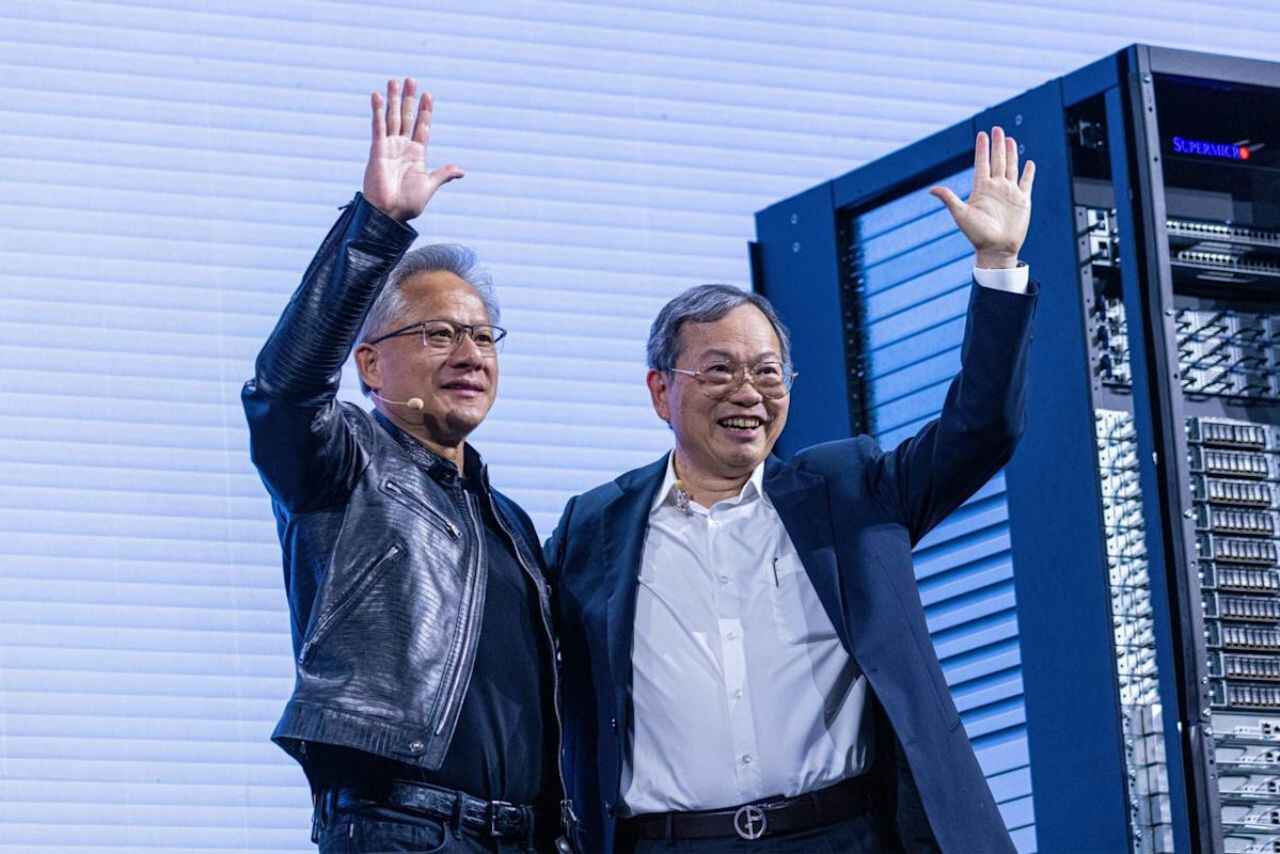
The image shows Jensen Huang and Yih-Shyan “Wally” Liaw
Liaw, 71, co-founded Supermicro back in 1993. He currently serves as senior vice president of business development and holds a board seat at the company. His personal stake in Supermicro is valued at approximately $464 million. U.S. authorities arrested him on Thursday.
Chang, 53, works as a sales manager out of Supermicro’s Taiwan office. He remains a fugitive. Sun, 44, is described in the indictment as a “third-party broker and fixer” who helped connect the other two with buyers. Sun was also arrested on Thursday.
All three face a count of conspiring to violate the Export Control Reform Act a charge that carries a maximum prison sentence of 20 years. Each man additionally faces charges of conspiring to smuggle goods and conspiring to defraud the United States, each carrying up to five years in prison.
Supermicro confirmed the roles of all three men. The company placed its two employees on administrative leave and immediately ended its working relationship with Sun. “The conduct alleged in the indictment is a contravention of the Company’s policies and compliance controls,” Supermicro said in a statement. The company added that it is “cooperating fully” with the government’s investigation.

The Paper Trail And the Fake One
The mechanics of the scheme, as described in the indictment, show careful and deliberate planning. Prosecutors say the three men sold servers worth $2.5 billion to a company based in Southeast Asia. That company then acted as a middleman. It compiled fake paperwork designed to make it look like the servers would stay in Southeast Asia for local use.
Then a separate logistics firm stepped in. It repackaged the server boxes to hide their contents. After that, the servers moved on to their real destination: China. Between late April 2025 and mid-May 2025 alone, $510 million worth of servers containing banned Nvidia GPUs made that journey.
On the other hand, the defendants worked to keep Supermicro’s own compliance team in the dark. According to the indictment, they placed “dummy” servers at the Southeast Asian company’s storage facilities. On paper and on site, everything looked legitimate. The real servers had already left for China. When a U.S. export control officer visited for an audit, prosecutors say those dummy servers were on display again a calculated deception.
Chang allegedly went further. He worked to steer auditors away from the parts of data centers where the real servers should have been. He also arranged for what the indictment calls a “friendly” auditor to conduct the official review. In 2024, Supermicro’s longtime auditor Ernst & Young resigned from the account; the company subsequently brought in BDO as a replacement.
“They did so through a tangled web of lies, obfuscation, and concealment all to drive sales in violation of U.S. law.” – U.S. Attorney Jay Clayton
Text messages cited in the indictment paint a vivid picture. In late 2024, Liaw pushed the Southeast Asian company to move toward Nvidia’s newer B200 chip the Blackwell architecture that represents Nvidia’s cutting edge. “Roughly how many you can take by January? Feb? March? April?” Liaw allegedly wrote. He framed the push as a way to secure a larger B200 allocation from Nvidia itself.
The urgency only grew in 2025. Prosecutors say Liaw sent a link to a White House statement about an upcoming export rule, urging that shipments needed to accelerate before the rule took effect. Then, when a broker forwarded Liaw news about Chinese nationals arrested for smuggling AI chips, the alleged co-conspirator responded according to the indictment with sobbing emojis.
A Loophole the Size of Southeast Asia
The indictment is striking not just for what it reveals about this particular scheme. It also shines a light on a broader, systemic problem that U.S. policymakers have struggled to close: the Southeast Asia routing loophole.
Since the United States tightened its AI chip export controls in 2022, concerns about “transhipment” have mounted. Advanced chips leave American hands bound for neighbouring countries, Malaysia, Singapore, Thailand, and then quietly find their way into China. The question has always been: how much is getting through?
A Financial Times investigation published last July offered one answer. China reportedly secured around $1 billion in advanced AI processors in the three months following President Donald Trump’s tightened restrictions. That is a staggering number for a single quarter, and it suggests the problem is not minor or isolated.
Chris McGuire, a senior fellow for China and emerging technologies at the Council on Foreign Relations, said the indictment exposes “glaring loopholes” in the current export enforcement framework. “This operation is further evidence that China is aggressively stealing U.S. technology to help power its AI industry,” McGuire said. He added that the drive to obtain American chips is unsurprising, given U.S. AI chips are far superior to anything China can currently manufacture.
WHY THESE CHIPS MATTER
Nvidia’s H200 and B200 GPUs are among the most powerful tools for training large AI models. Countries that control these chips hold a significant advantage in the global AI race. The U.S. banned their export to China without a government license, citing national security concerns making them among the most tightly guarded commercial technologies in the world.
As a result, the Southeast Asia route has become the path of least resistance for those seeking to circumvent controls. Goods flow through these countries with far less scrutiny than direct U.S.-to-China shipments. The indictment now gives regulators a detailed blueprint of exactly how that process works and the pressure to act on it will be substantial.
Nvidia moved swiftly to distance itself from the alleged scheme. “Unlawful diversion of controlled U.S. computers to China is a losing proposition across the board,” an Nvidia spokesperson said. The company emphasized that it provides no service or support for such systems and that “strict compliance is a top priority.”
A Shifting Policy Landscape
The case arrives at a complicated moment in U.S.-China chip policy. The rules are not as fixed as they may appear, and Washington has been gradually adjusting its position.
In 2022, the Biden administration drew a hard line. Advanced chips like the H200 and B200 were off-limits for China without a special government license. The goal was to slow China’s AI development and protect U.S. national security. U.S. Attorney Jay Clayton put it plainly: “Diversion schemes like those disrupted today generate billions of dollars in ill-gotten gains and pose a direct threat to U.S. national security.”
Yet under the Trump administration, the picture has grown more nuanced. Last August, the White House struck a deal with Nvidia to allow sales of its less powerful H20 chip to China. As part of that arrangement, Nvidia agreed to share 15% of its Chinese chip revenues with the U.S. government. Earlier this year, Nvidia CEO Jensen Huang confirmed that small amounts of H200 products for China-based customers had received government approval.
Furthermore, Trump told China’s President Xi Jinping directly in December that the U.S. would permit Nvidia to ship H200 GPUs to China under conditions that protect national security. This week, Huang confirmed that Nvidia is restarting manufacturing to fulfill H200 purchase orders from China.
In other words, some of the chips that were allegedly smuggled into China are now, under certain conditions, being sold there legally. That creates a complex backdrop for the prosecution. Nevertheless, the alleged conduct of fake paperwork, dummy servers, deliberate deception of auditors remains clearly illegal regardless of how the broader policy environment shifts.
The case also lands amid intensifying competition in AI. American companies like Anthropic and OpenAI face mounting pressure from Chinese rivals, most notably DeepSeek. Meanwhile, the U.S. government has been actively investigating how high-powered chips reach China without authorization and this indictment represents the most concrete result of that investigation yet.
Supermicro shares dropped about 25% in after-hours trading following the release of the indictment. Liaw personally controls approximately $464 million in Supermicro stock a figure that shows how much was potentially at stake for the alleged participants in the scheme.
The broader implications of this case extend well beyond three individuals and one company. The U.S. government has long assumed that export controls, if properly enforced, can meaningfully slow China’s access to cutting-edge AI hardware. This indictment suggests those controls have significant gaps and that determined actors have been actively and creatively exploiting them. Therefore, the question policymakers now face is not just how to prosecute the past. It is how to close the holes before the next scheme moves through them.
“Crimes involving sensitive technology must be met with swift action otherwise the law is meaningless.” – U.S. Attorney Jay Clayton
As for the chip war itself, one thing is clear: it is being fought not just in laboratories and boardrooms, but also in warehouses, shipping containers, and auditor-reviewed data centers scattered across Southeast Asia. And for a while at least, one side appeared to be winning quietly, and with a stack of dummy servers to prove it.
Disclaimer: The views and investment tips expressed by investment experts/broking houses/rating agencies on tradebrains.in are their own, and not that of the website or its management. Investing in equities poses a risk of financial losses. Investors must therefore exercise due caution while investing or trading in stocks. Trade Brains Technologies Private Limited or the author are not liable for any losses caused as a result of the decision based on this article. Please consult your investment advisor before investing.