
The Ultimate Guide to Futures Trading Simulators: Master the Market Risk-Free

Are you struggling to gain real market experience without risking your hard-earned capital? You aren’t alone. Futures trading offers high leverage and massive potential, but the learning curve is steep—and expensive. Most traders blow up their first account within 90 days because they are practicing with real money in a market that takes no prisoners.
A futures trading simulator is the bridge between losing money and consistent profitability. But not all simulators are created equal.
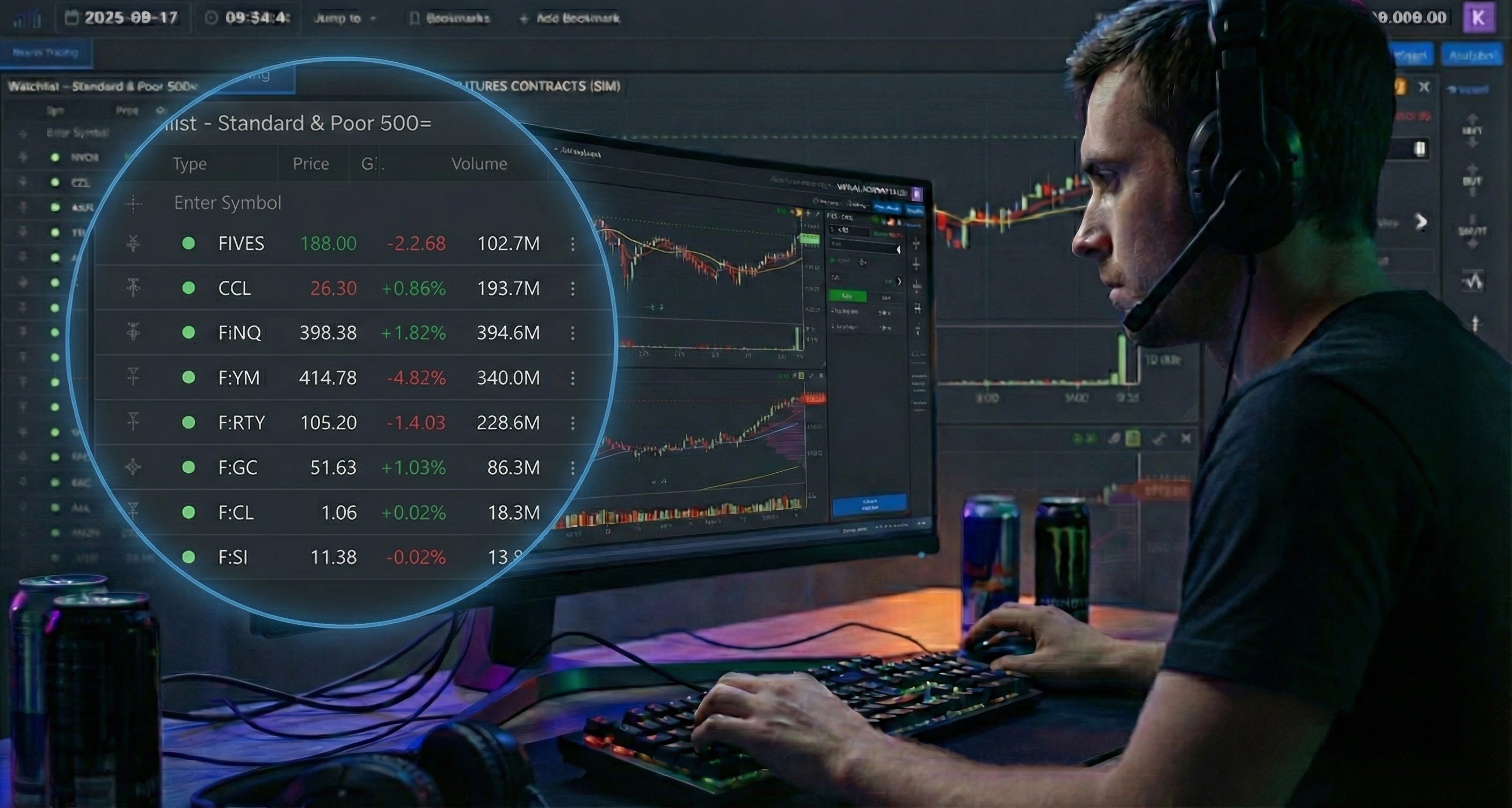
This article explores how these tools provide a risk-free environment to practice strategies, analyze volatility, and build confidence. We will cover the critical difference between standard “paper trading” and “market replay,” and why dedicated platforms like Tradingsim are the secret weapon for serious day traders looking to get funded.
Part 1: What is a Futures Trading Simulator?
A futures trading simulator is a sophisticated software tool that replicates the dynamics of real futures markets (like the CME, NYMEX, or ICE). It allows users to practice trading assets such as the E-mini S&P 500 (ES), Nasdaq 100 (NQ), Crude Oil (CL), and Gold (GC) without financial risk.
Unlike a static chart, a simulator mimics the live environment—including order execution, margin requirements, tick values, and price volatility—allowing you to test your edge before the opening bell rings.
The “Paper Trading” Trap
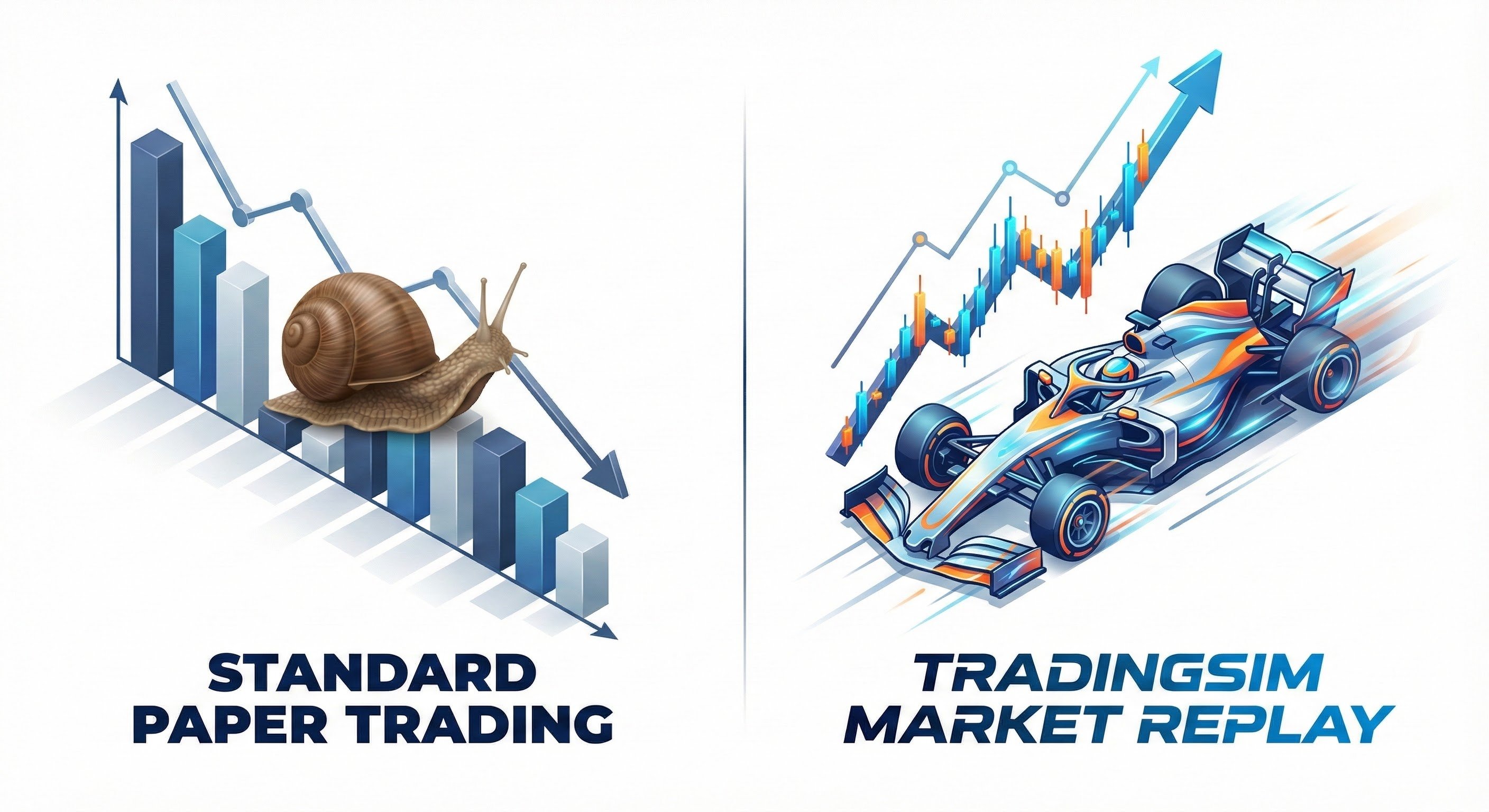
Most beginners confuse Paper Trading with Market Replay. Understanding this distinction is the difference between taking 2 years to learn to trade and taking 3 months.
1. Standard Paper Trading (The “Waiting Game”)
Platforms like Thinkorswim, Webull, or Interactive Brokers offer paper trading. This is simply a demo account connected to the live market feed.
-
The Problem: You are bound by real-time. If you want to practice trading the market open (9:30 AM EST), you must be physically present at 9:30 AM EST. If the market is chopping sideways for 4 hours, you have to sit there for 4 hours to see what happens.
-
The Result: Your learning curve is slow because you are limited to one trading session per day.
2. Market Replay (The “Time Machine”)
This is what Tradingsim offers. Market Replay allows you to access years of historical tick-by-tick data and replay it as if it were live.
-
The Advantage: You can trade the “Market Open” 10 times in a single hour. You can fast-forward through the boring chopped periods and rewind to replay a specific breakout setup until you master it.
-
The Result: You can practice 2 years’ worth of trading data in a single weekend. This is “deep practice,” similar to how a pro athlete watches game tape.
Part 2: Feature Showdown – Tradingsim vs. The Rest
To demonstrate the distinction between other simulators and Tradingsim, consider this comparison grid.
Comparison Grid: Tradingsim vs. Broker Simulators
| Feature | Tradingsim | Thinkorswim (Paper) | Webull (Paper) | Topstep (Practice) |
|---|---|---|---|---|
| Data Type | Historical Tick-by-Tick (2+ Years) | Live Stream Only | Live Stream Only | Live Stream Only |
| Market Replay | Yes (24/7 Access) | No (OnDemand is clunky) | No | No |
| Weekend Practice | Yes (Trade anytime) | No (Markets are closed) | No | No |
| Fast Forward | Yes (Skip the chop) | No | No | No |
| Risk Analytics | Advanced (P&L, Drawdown, Win%) | Basic | Basic | Basic |
| Setup Time | Instant (Web-based) | High (Software Install) | Medium | High |
| Cost | Fixed Monthly/Annual | Free (Requires Account) | Free | $150+/mo (Evaluation) |
The Verdict: Broker simulators are fine for learning how to click “Buy” and “Sell.” Tradingsim is for learning how to make money.
Part 3: Why Futures Traders Need a Specialized Simulator
Futures are different from stocks. They are highly leveraged, move based on different catalysts (macroeconomic data), and have specific “personalities.” A generic stock simulator won’t cut it.
1. Understanding Contract Specifications
In Tradingsim, you aren’t just trading a ticker; you are trading the contract. You learn the “tick value” of every instrument:
-
ES (S&P 500): $12.50 per tick. A 4-point move is $200 per contract.
-
NQ (Nasdaq 100): $5.00 per tick. A highly volatile beast that can rip 50 points in seconds.
-
CL (Crude Oil): $10.00 per tick. Known for technical precision and respect for support/resistance.
-
GC (Gold): $10.00 per tick. Driven by fear, inflation, and the US Dollar.
Practicing on a simulator teaches you to respect the leverage. A 10-point loss on the NQ with 1 contract is $200. With 10 contracts, it’s $2,000. You need to feel that pain in the simulator before you feel it in your bank account.
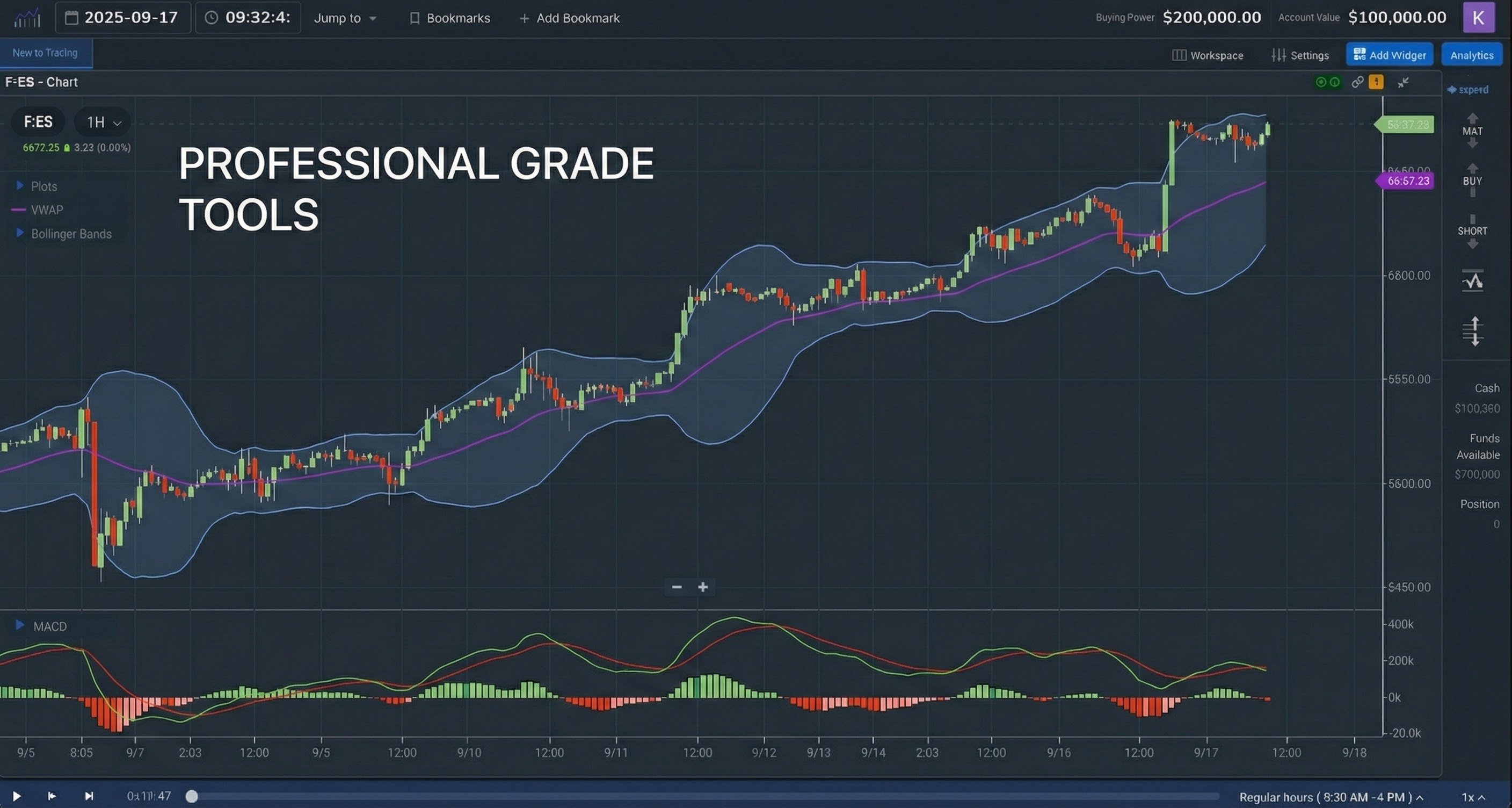
2. Native Indicators for Futures
Futures traders rely on specific tools. Tradingsim includes the heavy hitters:
Part 4: The “Prop Firm” Shortcut – How to Get Funded
This is the biggest trend in 2025. “Prop Firms” like Topstep, Apex Trader Funding, and MyFunded Futures will give you capital (e.g., $50,000 to $150,000 buying power) to trade if you can pass their evaluation.
The Catch: You have to follow strict rules.
-
Profit Target: Usually $3,000 – $9,000 depending on account size.
-
Daily Loss Limit: You cannot lose more than $1,000 in a day.
-
Trailing Drawdown: You cannot lose money from your peak balance.
How Tradingsim Helps You Pass
Most traders fail these evaluations because they pay $150/month to take the test before they are ready. They use the evaluation as practice. This is burning money.
The Smart Strategy:
-
Simulate the Combine: Use Tradingsim to set up a “mock combine.”
-
Enforce the Rules: Tell yourself, “If I lose $1,000 in my Tradingsim account today, I am done.”
-
Practice the Specific Hours: Prop firms often restrict trading during major news events. Use Tradingsim’s replay to practice trading around 8:30 AM CPI data releases to see how volatile the slippage can be.
💡 Pro Tip:
Do not pay for a Topstep combine until you have passed it 3 times in a row on Tradingsim. This discipline alone will save you thousands of dollars in reset fees.
Part 5: Strategies for Effective Practice
To get the most out of a simulator, you must treat the fake money as real. Here are three specific drills you can run in Tradingsim today.
Drill 1: The “Opening Range Breakout” (ORB)
This is a classic futures strategy.
-
The Setup: Load up the Nasdaq 100 (NQ).
-
The Process: Wait for the first 15 minutes of the market open (9:30 AM – 9:45 AM).
-
The Trigger: Draw a line at the High and Low of that 15-minute range. If price breaks above the high, buy. If it breaks below the low, sell.
-
The Replay: Replay the last 30 days of market opens. How many times did this work? Did it fake out?
-
The Lesson: You will learn that NQ often has a “fake-out” before the real move. You can only learn this nuance by seeing it 50 times in a row.
Drill 2: The “Trend Pullback”
-
The Setup: Load Crude Oil (CL).
-
The Indicator: Turn on the 20-period Moving Average (20MA).
-
The Process: Fast forward until you see a clear trend (price is consistently above the 20MA).
-
The Trigger: Wait for price to touch the 20MA. Enter long. Place your stop below the previous candle low.
-
The Replay: Practice managing the trade. Do you sell at the first pop? Or do you trail your stop?
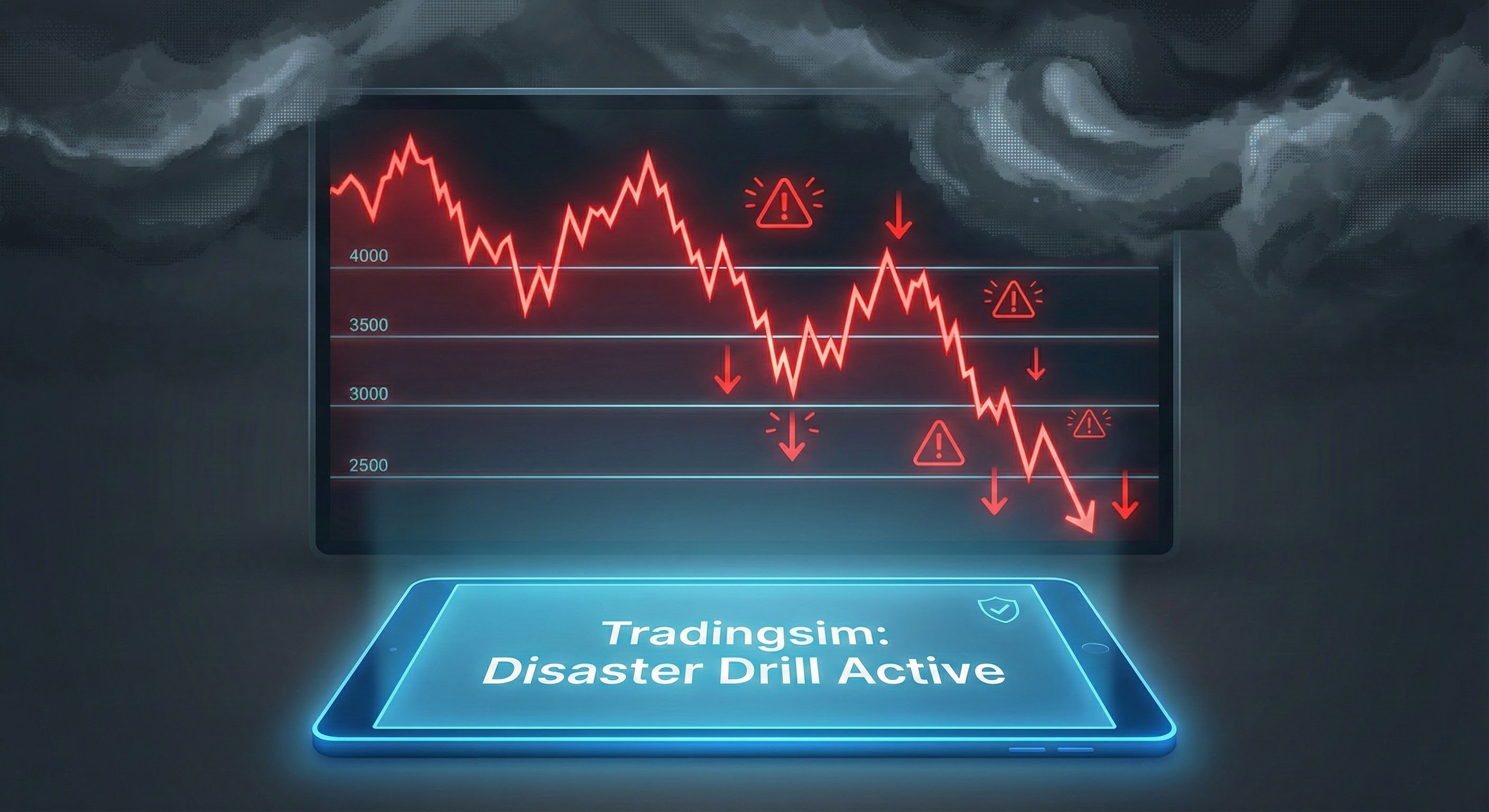
Drill 3: The “Disaster Day” Management
-
The Setup: Pick a day in history known for massive crashes (e.g., March 2020, or a recent CPI release).
-
The Goal: Survival.
-
The Drill: Try to trade this volatility without blowing up your account.
-
The Lesson: You will learn that sometimes the best trade is no trade. Seeing the speed of a crash in a simulator inoculates you against the fear when it happens live.
Part 6: Developing the Trader’s Mindset (Psychology)
A simulator can teach you mechanics, but can it teach you psychology? Yes, if you use it correctly.
The “Simulated Emotion” Technique
The reason demo trading often fails is the lack of emotional “pain.” To fix this, you must attach consequences to your simulation.
-
The Rule: “If I violate my rules in Tradingsim (e.g., moving a stop loss), I am not allowed to watch Netflix tonight.” or “I must do 50 pushups.”
-
The Effect: By attaching a real-world annoyance to a virtual mistake, you begin to wire your brain to respect the risk.
Overcoming FOMO (Fear Of Missing Out)
In live markets, when you see a green candle ripping up, you feel the urge to chase it.
-
Tradingsim Solution: Use the Rewind button. When you miss a move in the simulator, pause. Rewind. Look at the chart before the move happened. Was there a signal? Or was it random?
-
Often, you’ll realize there was no signal, and chasing it would have been gambling. This builds the discipline to let random moves go.
Part 7: Transitioning to Live Markets
The ultimate goal of a simulator is to graduate. You are ready to transition to live futures trading when you meet these benchmarks:
-
The 100-Trade Sample: You have executed 100 trades in Tradingsim using one specific strategy.
-
The Profit Factor: Your gross profits divided by gross losses is greater than 1.5.
-
The Drawdown Test: You have experienced a losing streak (everyone does) and did not change your strategy or increase your position size to “make it back.”
The “Micro” Step
When you go live, do not jump straight to the E-mini (ES). Start with the Micro E-mini (MES).
Conclusion
Futures trading simulators are the flight simulators of the financial world. You wouldn’t trust a pilot who learned to fly solely by reading a book; you shouldn’t trust yourself with your savings until you’ve logged your flight hours.
They prepare you for the turbulence of the live market without the crash. Whether you are looking to trade the E-mini, scalp the Nasdaq, or position trade Crude Oil, starting with a platform like Tradingsim ensures you build the necessary skills to navigate volatility and secure your edge.
Stop playing games with “paper trading” apps. Start building a career with Market Replay.
This video is relevant because it provides a visual walkthrough of passing a Topstep combine, reinforcing the specific “Prop Firm” strategies discussed in the blog post.